
The Microphone Can't Hear You From There

Why a great speech, reading, blessing, or song can disappear when the microphone starts wandering.

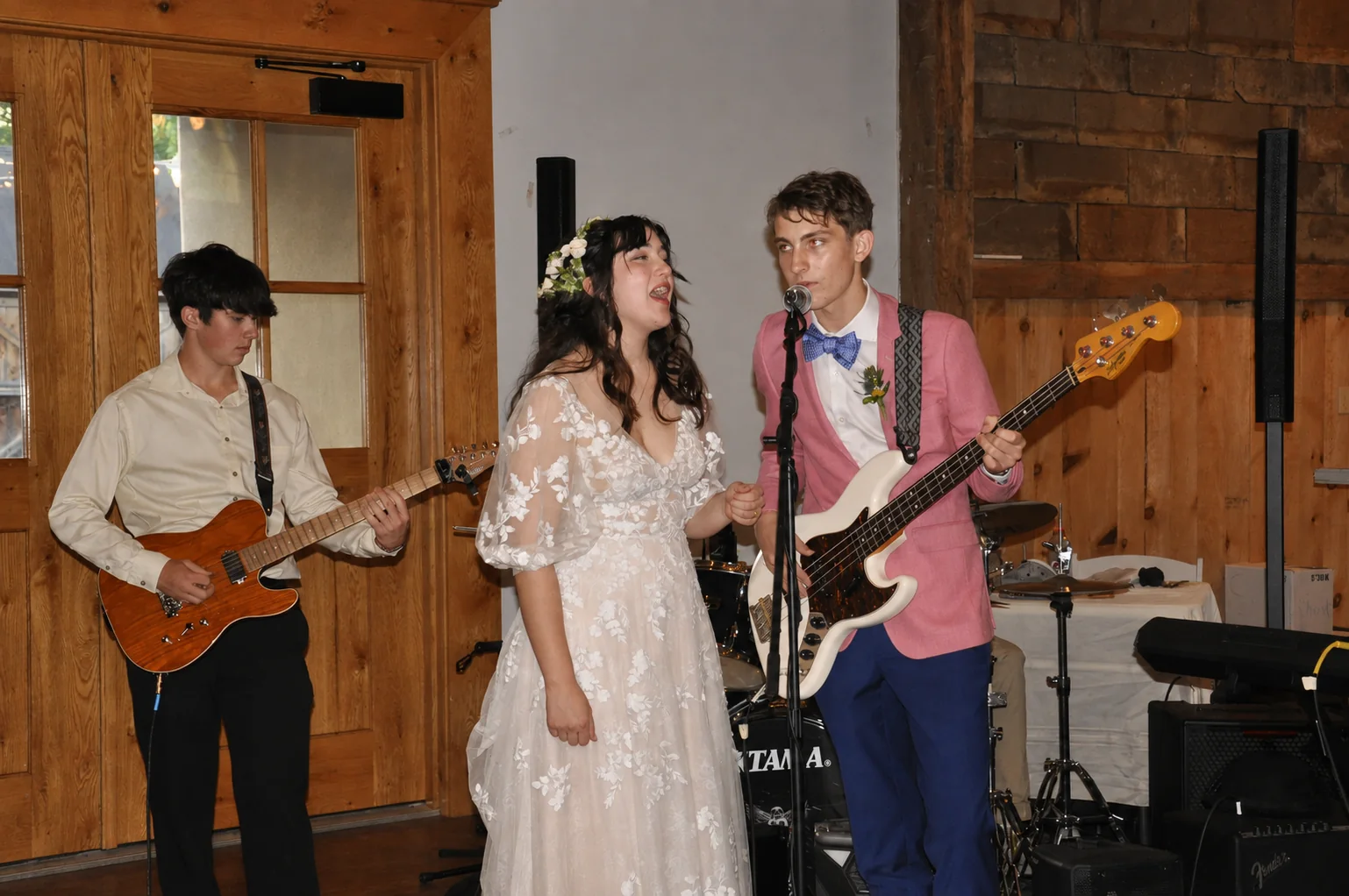
Bride singing beside her brother's band as he sings directly into a microphone at a wedding reception
A real wedding moment that happens to show just how much microphone distance matters.

Around here, there's a running theory about why microphones slowly migrate away from people's mouths during welcomes, blessings, toasts and speeches.

Apparently, they get too heavy.

We're joking, of course. But after watching enough people use handheld microphones at weddings, you might start to wonder. A microphone begins exactly where it should be. Then, little by little, it starts moving down. Chin level. Chest level. Somewhere around the stomach. Meanwhile, the person speaking keeps going, and eventually, we can barely hear them.

A Microphone Can Only Work With What You Give It

At a recent wedding, the father of the bride stepped up to give the welcome. He had the microphone, but as he spoke, it gradually moved farther from his mouth. Sometimes he brought it back up. Then it would drift down again. He would also naturally turn his head as he addressed different people in the room, but the microphone didn't always turn with him.

His voice would become faint. He'd realize it, bring the microphone closer, and suddenly we'd have him again. From behind the DJ setup, we're doing what we can, but there is a limit.

We aren't just trying to make a microphone louder. We're trying to make the person holding it louder without making everything around them louder, too.

The microphone doesn't know which sound we want. Move it away from the voice and ask it to pick up more, and it may start hearing more of the room, too. At this particular reception, that included the fans in the hall.

This Is What Happens in the Real World

The photograph at the top of this story happens to demonstrate this almost perfectly. At another wedding, the bride's brother had a band, and she asked him to play a few songs at the reception. She joined him to sing, something the two of them had done together before.

They're both singing. They're standing beside each other and sharing the same song and the same moment. But her brother is singing directly into the microphone while the bride is singing from farther away. From the microphone's point of view, they're in two very different places.

The microphone doesn't know whose voice matters more. It simply hears what reaches it.

And this is what happens in the real world all the time. People aren't thinking about microphone position. They're thinking about the song they're singing, the welcome they're giving, the blessing they're offering, the person they're talking to, or the moment they're experiencing. But the microphone only knows what reaches it.

Then Someone Else Takes the Same Microphone

Back at that recent wedding, the maid of honor spoke next. Same room. Same sound system. Same microphone. She kept the microphone near her mouth while she spoke, and her toast came through clearly.

That's important, because when someone is difficult to hear, people naturally assume something is wrong with the sound system. Not necessarily. A microphone can only amplify the sound that reaches it.

Then came the best man, and there it was again. The microphone started near his mouth and gradually traveled down his body while his head moved from side to side. We've seen some version of this countless times.

Sometimes a Photograph Catches It

We found another photograph in our own collection that shows just how naturally this happens. During an outdoor wedding ceremony, the officiant is speaking while looking toward the couple. Nothing unusual is happening, but the microphone has moved away from the mouth and down toward the chest.
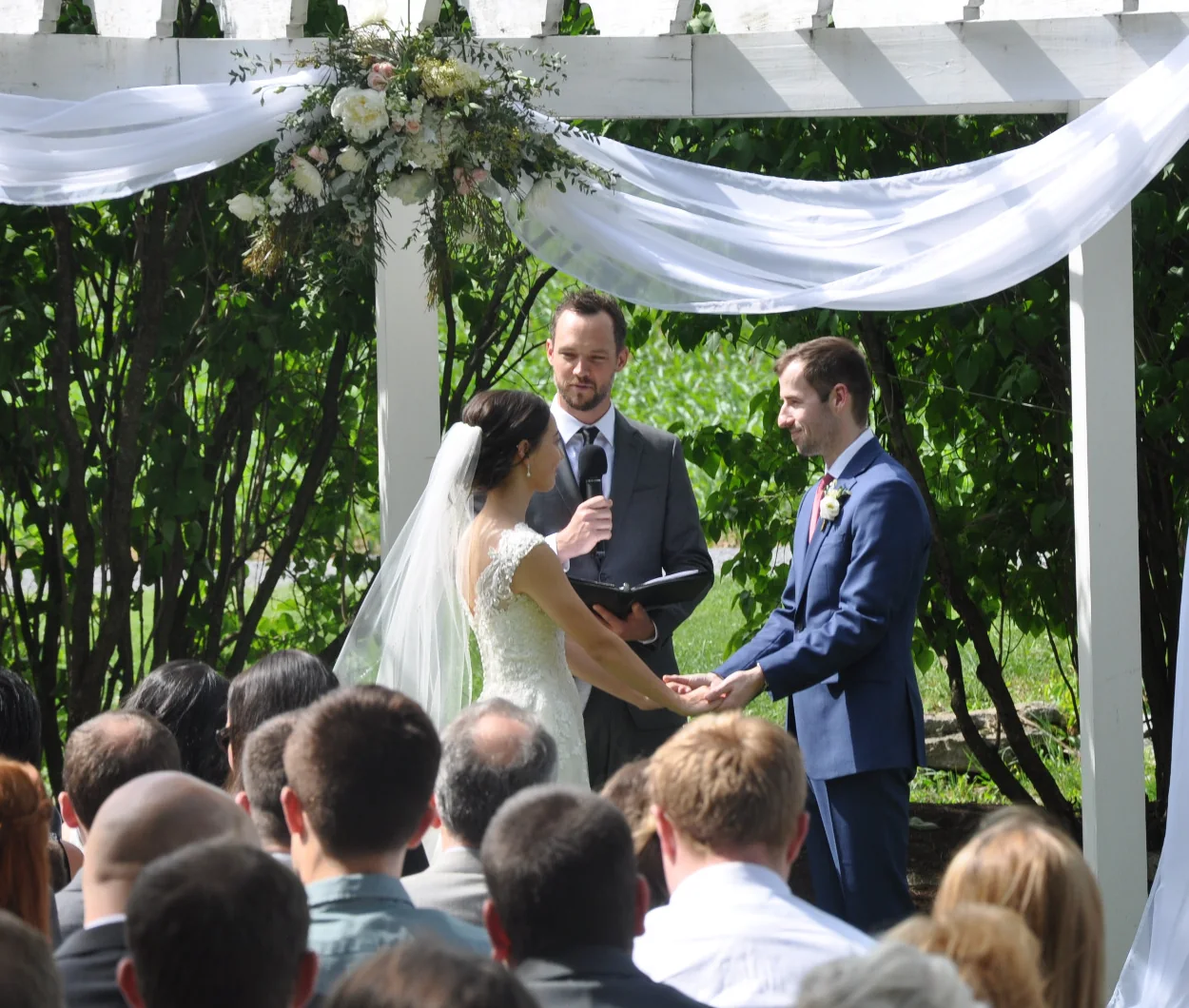
Wedding officiant speaking during an outdoor ceremony while holding a handheld microphone away from the mouth
A close look at an ordinary ceremony moment shows how easily a handheld microphone can drift away while someone is focused on speaking.

That photograph wasn't taken to demonstrate microphone technique. It simply caught a real ceremony as it was happening. And that's the point. Nobody is standing there thinking, Where is my microphone right now? The officiant is conducting a wedding. A parent is thinking about the words they want to say. A best man is looking at his friend. A bride is singing with her brother. The microphone is along for the ride.

Standing Near a Microphone Isn't the Same as Speaking Into It

Handheld microphones aren't the only place this happens. During the ceremony at the recent wedding, there was a microphone on an adjustable stand for a reading. We didn't know beforehand who would be doing the reading, so the microphone was set at a reasonable starting height.

When the reader came forward, rather than adjusting the microphone and standing in front of it, the reader stood somewhat off to the side and spoke across it. The microphone was right there. The voice wasn't.

The officiant had adjusted that same stand microphone up and down for herself. That's exactly why the stand is adjustable. Being close to a microphone and actually speaking into the microphone aren't always the same thing.

And Sometimes Where You Stand Matters Too

Where you stand can matter just as much as where you hold the microphone. One place you don't want to stand is directly in front of a speaker. Put a live microphone in front of the speaker that's amplifying it, and you can create a loop. The microphone picks up the speaker, the sound gets amplified again, the microphone picks it up again, and that's when you get that unmistakable blast of feedback.

Room acoustics matter too. At the reception with the fans, before one of us needed to speak, the DJ gave a quick reminder to be careful of the fans and move toward the middle of the dance floor. There was a reason. Sometimes a few steps can make a difference.

So if a DJ asks someone who'll be speaking to stand in a particular place, it probably isn't because we're trying to rearrange the room. We're trying to help everyone hear them.

The Easy Part

Nobody speaking at a wedding should need a lesson in sound engineering. Most people don't use microphones every day. They're thinking about what they want to say, trying not to lose their place, looking at the couple, dealing with nerves, or concentrating on the moment. The microphone is probably the last thing on their mind.

Fortunately, the basics are pretty simple. Keep the microphone close to your mouth. If you turn your head, let the microphone travel with you. If you're using a microphone on a stand, adjust it so you're comfortably speaking into it rather than beside it. And don't wander directly in front of the speakers.

Of course, after watching enough microphones slowly work their way from mouth level to chest level during welcomes, blessings, toasts and speeches, we may have found another solution.

If someone is going to have to hold the microphone, future happy couples might want to tell them to start working on their arm strength before the wedding.

Apparently, keeping a microphone near your mouth for a few minutes requires more muscle than we realized.

We're kidding, of course.
Mostly.

Fortunately, nobody needs microphone training before a wedding. Just keep it close enough to hear you.

Because when someone has something worth saying, we want the people in the room to hear it.

And unfortunately... the microphone really can't hear you from there.

← Previous Story Back to Top Back to Blog Home Next Story →