A wedding timeline matters. It tells everyone when the wedding party will be introduced, when dinner begins, when it's time for the first dance, and when those special moments you've planned will happen.
Then the dance floor opens.
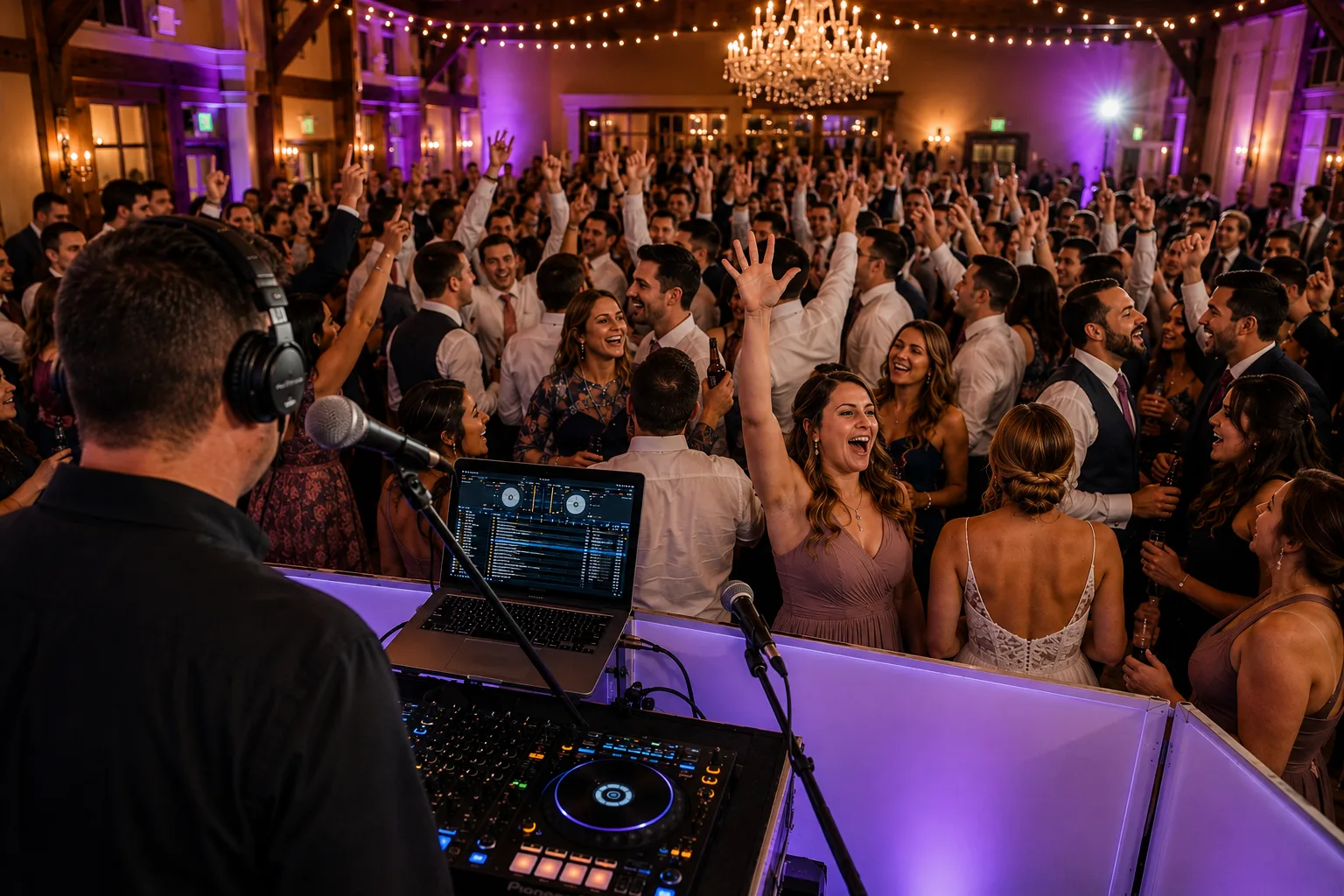
There usually isn't a timeline telling the DJ exactly what song should come next. The room does.
The Dance Floor Is Always Saying Something
Every dance floor has its own personality. A song that fills the floor at one wedding can get a completely different reaction at another. Even during the same celebration, the energy can change from one moment to the next.
A dance floor is constantly giving signals. Who's dancing? Who just joined? Are guests singing along? Is the energy building? Does the room want more of what it's hearing, or is it ready to move somewhere else?
That's crowd reading.
Your favorite songs, must-plays, do-not-plays, and the conversations before your wedding create the foundation. Reading the room helps determine where the music should go from there.
But knowing where to go is only half of it.
Beat Matching Is Part of the Way We DJ
For And We Danced, beat matching is a guiding principle behind the way we approach the music.
It isn't something reserved for a club mix or something that happens only when a particular playlist allows it. It's part of creating continuity on the dance floor.
Instead of treating every song like a separate moment, beat matching helps the music flow naturally from one track into the next. Combined with phrasing, song selection, and thoughtful transitions, it helps maintain the rhythm and energy that have already been created.
But a technically smooth mix only matters if the music is moving in the right direction. That's where reading the room comes in.
Read the Room. Mix With Intention.
Crowd reading and beat matching work together. Reading the room tells us where the music should go. Beat matching helps keep the journey moving.
Sometimes the dance floor wants to stay exactly where it is. Sometimes the energy is ready to build. Sometimes it's time to move into another style, generation, or tempo.
And sometimes a transition between very different songs requires more than simply matching one beat to another. The goal isn't to force two songs together. The goal is to understand their rhythm, phrasing, energy, and place in the moment so the change feels intentional.
That's part of the craft.
A great request might be exactly what the room needs next. That same request ten minutes earlier might interrupt a moment that's already working. Those decisions happen in real time.
There isn't a playlist that can make them in advance.
Your Music Creates the Foundation
Leaving room for a DJ to read the crowd doesn't mean giving up control of your wedding music. Your music matters.
Favorite artists and songs help establish the personality of the celebration. Must-plays identify the moments and music that matter most. A do-not-play list creates boundaries that should always be respected.
Some couples have a handful of favorites. Others have many more ideas. Either approach can work.
The goal isn't to replace your music with ours. It's to understand what you love and build from it while paying attention to the celebration happening in front of us.
Because the dance floor should still feel like your wedding.
There's More Than One Kind of Timing
Following a wedding timeline is important. Introductions need to happen at the right time. Special dances need to be ready. Announcements, dinner, cake cutting, and all the moments you've spent months planning need to come together.
But once the dance floor opens, another kind of timing takes over. It's knowing when to stay with a sound, when to transition, when to change direction, when to build the energy, and when to bring generations together.
And sometimes it's knowing when to leave everything alone because the dance floor is already telling you it's working.
That's where preparation meets the moment.
A timeline helps determine what happens next in your celebration. The room helps determine where the music should go next.
And beat matching helps keep that music moving.
That's where crowd reading, song selection, timing, phrasing, transitions, and the art of mixing come together.
That's the craft behind the celebration.
You planned. You celebrated. ...And We Danced.